So I go to Princeton to have dinner with my parents. After getting the Chinese food I walk into the kitchen and there on the kitchen table is a brand new Magellan GPS in its box. Tactfully, I pretend I don't see it and pick up the bottle of seltzer next to it.
So of course Iona sees all this.
At dinner she announces that I've seen my Christmas present.
Dad: Oh, well that's good because we were thinking about giving it to you early.
Iona: And borrowing it for our trip to Georgia over Christmas.
Yep. That made me almost snortle General Tso's chicken.
Here's an early Christmas weasel for you.
What would be in the interest of preventing an otherwise formidable instance without the means.
Thursday, December 08, 2011
Our New Home
| Across the street is the most amazing Fascist piece of architecture in NYC -- this AT&T building. |
| This is the door to our building. My skills as a photographer plummeted upon reaching TriBeCa. Maybe I'm just more committed to my art. Yeah, that's it. I'm making art now. |
| When you first walk in -- the top foyer -- movie posters everywhere. |
| Go down the first set of stairs. |
| Then you come to this door. |
| And go down the second set of stairs. |
| Our office has two doors. |
| There's really only one right corner in the office. And there's a window there. |
| There are two brick pillars which are slightly inside the room. |
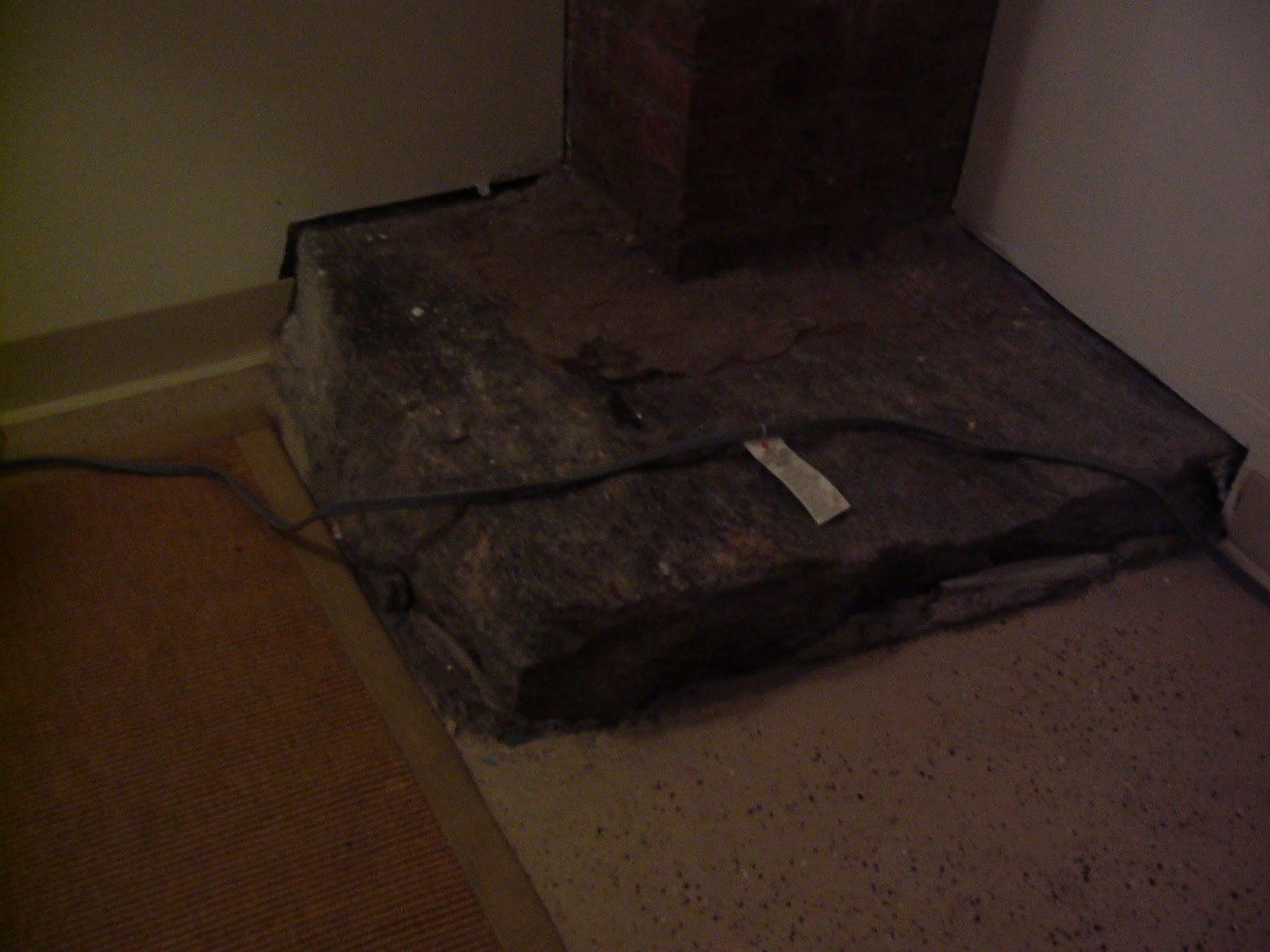
| Here you can see how the pillars terminate into concrete blocks. |
| Here's a closer picture. I guess those are granite blocks. We'll have to make our desks go around those. |
| The big question is why do I have this measuring tape clearly labeled with another theater companies name? |
Wednesday, December 07, 2011
Here's Mine
Question 811B is whether Tyrannosaurus Mouse is going to record anything before the end of the year. And will we do it here at Theatresource or will we do it at my apartment or what?
Via Jonathan Newman, the Contemporary Classical Composer's Bullshit Generator. Here's mine:
My work aims to re-bar generatively-integral arts with modernly-ambiguous chords whilst composing certain pitches or psycho-extended tessituras. Recently, I have started to embrace silences as a strongly-modernistic alternative to established forms of microtonal time-signature-experiences, which has made my work diametricly apparent. The fact that imitations tend to (at least in their aesthetic state), harmonically visualise, even in the presence of a strong element, is, you will agree, patently absurd. My latest piece begins with a rather musical 'sketch-aesthetic', before experimentally transforming the existing innovative material into a more Stockhausenesquely-quartal state, a process I term 'actively-rhythmic-examining'. Recently, I have started to embrace techniques as a strongly-integral alternative to established forms of choreographic device-installations, which has made my work innovatively predominant.
Don't Work Too Hard
Peggy Archer complains about 14-hour-days and 6-day weeks.
I complain about them for different reasons.
If G&E is working a 14-hour day then the director and producers are working 18 hours. If G&E is doing 6-day weeks then the director and producers are doing 8-day weeks (you do the math).
Now, the exhaustion that happens is mostly felt to be physical -- dragging cable up and down hills and that sort of thing. But physical exhaustion is bad, mental exhaustion is dangerous. With G&E that means you can have accidents -- mis-patching feeder cable can actually kill you. With everyone else (especially in California) it means people are driving while tired -- and that can kill a lot of people.
But the strange thing (to me) is that there is simply zero advantage to the director and producers to working that hard.
After about 8 hours you just stop thinking. For a lot of departments it doesn't really matter "bring sandbag over there, hold microphone over head, press big red button on camera". But for the director and producers not thinking clearly means bad decisions.*
So all that shooting you're doing after hour 10? It's junk. You could have done it four hours ago and then the stuff that you're going to be shooting later in the week will be that much better to.
I can't tell you how many shoots I've been on in New York where they go to do an 18-day shoot and they start losing locations so that by the end of the shoot the entire crew is literally standing around waiting for the director, the 1st AD, and the producers to go scout locations for us to pick up the rest of the shots. Scouting. While the entire crew waits in some park or something. Maybe I shouldn't use the word "literally" there because as a sound mixer I would surely be sitting down by that point. But you know what I mean.
So don't work long days. Long days will actually cost you time. I realize that every once in a while there's going to be a day where (say) the camera breaks at 10am and you have to wait for 4 hours to get a new one.
But as a rule, don't work long hours every single day. And take breaks. So say I. So say we all.
*Yes, we're all aware that many directors and producers are going to make stupid decisions long before getting to set when they're well-rested, but it gets worse when they're tired.
I complain about them for different reasons.
If G&E is working a 14-hour day then the director and producers are working 18 hours. If G&E is doing 6-day weeks then the director and producers are doing 8-day weeks (you do the math).
Now, the exhaustion that happens is mostly felt to be physical -- dragging cable up and down hills and that sort of thing. But physical exhaustion is bad, mental exhaustion is dangerous. With G&E that means you can have accidents -- mis-patching feeder cable can actually kill you. With everyone else (especially in California) it means people are driving while tired -- and that can kill a lot of people.
But the strange thing (to me) is that there is simply zero advantage to the director and producers to working that hard.
After about 8 hours you just stop thinking. For a lot of departments it doesn't really matter "bring sandbag over there, hold microphone over head, press big red button on camera". But for the director and producers not thinking clearly means bad decisions.*
So all that shooting you're doing after hour 10? It's junk. You could have done it four hours ago and then the stuff that you're going to be shooting later in the week will be that much better to.
I can't tell you how many shoots I've been on in New York where they go to do an 18-day shoot and they start losing locations so that by the end of the shoot the entire crew is literally standing around waiting for the director, the 1st AD, and the producers to go scout locations for us to pick up the rest of the shots. Scouting. While the entire crew waits in some park or something. Maybe I shouldn't use the word "literally" there because as a sound mixer I would surely be sitting down by that point. But you know what I mean.
So don't work long days. Long days will actually cost you time. I realize that every once in a while there's going to be a day where (say) the camera breaks at 10am and you have to wait for 4 hours to get a new one.
But as a rule, don't work long hours every single day. And take breaks. So say I. So say we all.
*Yes, we're all aware that many directors and producers are going to make stupid decisions long before getting to set when they're well-rested, but it gets worse when they're tired.
Tuesday, December 06, 2011
Apologizing
You know, and I realize that I'm cranky at this, but the incredible level of arrogance it took for this Board to stomp out all the hard work and energy that so many hundreds (thousands really) of people put in over the last 12 years is simply vile and atrocious.
Sure, I'm the last survivor of the founding members who never left to take a "sabbatical" and who has been inside, and remained inside, from the very beginning. But I'm going to be perfectly fine.
But all of those people -- even those who have been away for a while -- those people put a tremendous amount of work and heart into this place, making it what it is.
And they did it with a faith, with a trust, that the rug wouldn't be pulled out from under them by people who are either too lazy to do the work to keep the theater going, or to arrogant to admit that anyone, anyone could do a better job then them.
This Board, these dunderheads, few of whom ever even enter the building more than once every few months, are scuttling it. Selling it off for spare parts and walking away, as though they have no responsibility to any of the people who have put so much blood and sweat into the place.
Some of the people on the Board I'd considered friends. So I'm a little stunned at the spectacular level of destruction they're in the process of wreaking. It's destructive, arrogant, and deceitful. They're tearing down what has become an institution in New York Theater. They're doing it because they won't simply resign and let better people take over. And all this time they smiled and told everyone that they were working in the best interest of the theater, they were lying.
That's Courtney Birnbaum, Andrew Frank, Eric Laufer, Matt Quint, Melissa Riker, Doug Silver. I would also include former Board member Fiona Jones and Executive Director Jennifer Thatcher as they have done much to ensure the closing of the theater.
How much contempt do they have for the volunteers? Obviously so much that they don't care enough about the volunteers to even try to keep the theater open. The patronizing attitude toward the real people who have worked here so long is just sickening.
I think that each one of these people should apologize to every volunteer at Theatresource. They should apologize for abrogating their responsibilities to the public trust that is this fine and wonderful theater.
Sure, I'm the last survivor of the founding members who never left to take a "sabbatical" and who has been inside, and remained inside, from the very beginning. But I'm going to be perfectly fine.
But all of those people -- even those who have been away for a while -- those people put a tremendous amount of work and heart into this place, making it what it is.
And they did it with a faith, with a trust, that the rug wouldn't be pulled out from under them by people who are either too lazy to do the work to keep the theater going, or to arrogant to admit that anyone, anyone could do a better job then them.
This Board, these dunderheads, few of whom ever even enter the building more than once every few months, are scuttling it. Selling it off for spare parts and walking away, as though they have no responsibility to any of the people who have put so much blood and sweat into the place.
Some of the people on the Board I'd considered friends. So I'm a little stunned at the spectacular level of destruction they're in the process of wreaking. It's destructive, arrogant, and deceitful. They're tearing down what has become an institution in New York Theater. They're doing it because they won't simply resign and let better people take over. And all this time they smiled and told everyone that they were working in the best interest of the theater, they were lying.
That's Courtney Birnbaum, Andrew Frank, Eric Laufer, Matt Quint, Melissa Riker, Doug Silver. I would also include former Board member Fiona Jones and Executive Director Jennifer Thatcher as they have done much to ensure the closing of the theater.How much contempt do they have for the volunteers? Obviously so much that they don't care enough about the volunteers to even try to keep the theater open. The patronizing attitude toward the real people who have worked here so long is just sickening.
I think that each one of these people should apologize to every volunteer at Theatresource. They should apologize for abrogating their responsibilities to the public trust that is this fine and wonderful theater.
Take What You Need
So the "fire sale" of everything at Theatresource has made the entire place a huge mess. It's too bad, because we were making the place look so much nicer before the Board decided to dump it. And dump they did. The level of destruction of a place that so many hundreds of people have put 12 years into is sort of appalling.
It looks like we've got a new place to move to though. By "we" I mean we guys in the back office which used to be known as "DigitalSource". We're looking at a nice little film office and post-production suite in TriBeCa. I'll take some pictures soon, but this is the joint. We're going for the biggest of the three offices, which is a couple hundred bucks (in total) more than I though we'd want to spend, but it's only costing me $50/month more than what I've been paying up 'till now.
Hey, here's a thing you should note -- if you've been getting mail/packages delivered to Theatresource, you should change your address with the USPS.
This picture via my friend Jennifer Fay.
It looks like we've got a new place to move to though. By "we" I mean we guys in the back office which used to be known as "DigitalSource". We're looking at a nice little film office and post-production suite in TriBeCa. I'll take some pictures soon, but this is the joint. We're going for the biggest of the three offices, which is a couple hundred bucks (in total) more than I though we'd want to spend, but it's only costing me $50/month more than what I've been paying up 'till now.
Hey, here's a thing you should note -- if you've been getting mail/packages delivered to Theatresource, you should change your address with the USPS.
This picture via my friend Jennifer Fay.
Monday, December 05, 2011
The Takeover
![]() |
| Juanita Arias, Jeff Wills, Joe Chapman, Tom Rowen, and Virginia Logan in Android Insurrection. |
I suppose I don't really understand the purpose of a trailer for a short, but the work by Big Lazy Robot looks nice.
The Underwater Realm is a Kickstarter project. They're shooting some dry-for-wet and a bunch actually underwater.
Don't tell Joe but I'm totally planning a takeover of his new feature film. The trick is getting onboard without anybody noticing that I'm directing it. Maybe I just won't tell anyone.
Saturday, December 03, 2011
Dream Opera
Plagiarism. I don't get it. I can't even spell it. There are passages of this book cribbed from other books.
Maybe I don't care about what's called "plagiarism" because we steal the structure of other things outright. In fact, we say, "Oh look, this has the same structure as Man of La Mancha" or whatever. To me the "blah-di-blah" in-between is the relatively easy part. I mean, I just wrote the book to a musical where I stole from Apocalypse Now, Blade Runner, and Escape From New York.
And even if I hadn't overtly stolen from them, I would have stolen the structure from one of those things and still threw in some lines from my favorite movies.
And speaking of which, Blade Runner the Dream Opera or whatever it is now has been altered to accept the notes I've gotten on it. It's pretty much entirely cribbed from (obviously) Blade Runner, Escape from New York, and Apocalypse Now. There are lots of helicopters.
Also, I have a version of Alien Treasure which I'm not 100% sure how to shoot yet.
Maybe I don't care about what's called "plagiarism" because we steal the structure of other things outright. In fact, we say, "Oh look, this has the same structure as Man of La Mancha" or whatever. To me the "blah-di-blah" in-between is the relatively easy part. I mean, I just wrote the book to a musical where I stole from Apocalypse Now, Blade Runner, and Escape From New York.
And even if I hadn't overtly stolen from them, I would have stolen the structure from one of those things and still threw in some lines from my favorite movies.
And speaking of which, Blade Runner the Dream Opera or whatever it is now has been altered to accept the notes I've gotten on it. It's pretty much entirely cribbed from (obviously) Blade Runner, Escape from New York, and Apocalypse Now. There are lots of helicopters.
Also, I have a version of Alien Treasure which I'm not 100% sure how to shoot yet.
Oh Look
A video editor "mixed" this promo for Saturday Night Live. How can you tell? Because the mic for the guy on the left is in the left channel. The mic for the guy on the right is in the right channel. Just like the way it was recorded into the camera.
The production mixer (they're not really called that in TV -- I don't know how SNL does it but the position is likely called the "A1") is the person who was responsible for recording the dialog. And if you have two people, like this, you slap a lavaliere mic on each of 'em and send the mics to separate channels.
Very pro. That is, in fact, the pro way to do it.
But that's assuming that the person who will be touching the audio last (meaning, before it goes out to air) knows what they're doing with audio. And if you have a picture editor working on it, then it's likely they don't. Have pity on them. They're just simple picture editors. They don't know any better.
In Final Cut Pro the tracks that the two channels of camera audio would be dragged onto are, by default, panned hard left and right. But do you really want Bill panned hard left and Steve panned hard right? No, of course not. you want them both in the middle.
You can even hear Bill switch channels as he turns toward Steve. That's because as he turns toward Steve he's talking into Steve's mic. And he ends up (momentarily) being louder in Steve's mic than his own.
As the job of assembling all these takes and then putting them up on Hulu is probably one of the lowest-priority edit jobs on the show, it's probably thrown at the lowest-level editor they've got. Heck, the producers may have even lied to the editor and told 'em that someone was going to actually do the audio mix so they "don't have to worry about it". But the fact is, that as long as the audio seemed minimally acceptable to whomever uploaded it, that was the end of caring about it.
The trouble you get into when you do something like this is when somebody watches the dang video with (say) a speaker unplugged. If that happens then you lose one of the hosts. Either Bill or Steve will sound distant (because you'll only hear their feed from the other guy's mic.)
And mixing in FCP is no picnic. But it can be done. You just need to pay attention to what audio is bussed where.
The production mixer (they're not really called that in TV -- I don't know how SNL does it but the position is likely called the "A1") is the person who was responsible for recording the dialog. And if you have two people, like this, you slap a lavaliere mic on each of 'em and send the mics to separate channels.
Very pro. That is, in fact, the pro way to do it.
But that's assuming that the person who will be touching the audio last (meaning, before it goes out to air) knows what they're doing with audio. And if you have a picture editor working on it, then it's likely they don't. Have pity on them. They're just simple picture editors. They don't know any better.
In Final Cut Pro the tracks that the two channels of camera audio would be dragged onto are, by default, panned hard left and right. But do you really want Bill panned hard left and Steve panned hard right? No, of course not. you want them both in the middle.
You can even hear Bill switch channels as he turns toward Steve. That's because as he turns toward Steve he's talking into Steve's mic. And he ends up (momentarily) being louder in Steve's mic than his own.
As the job of assembling all these takes and then putting them up on Hulu is probably one of the lowest-priority edit jobs on the show, it's probably thrown at the lowest-level editor they've got. Heck, the producers may have even lied to the editor and told 'em that someone was going to actually do the audio mix so they "don't have to worry about it". But the fact is, that as long as the audio seemed minimally acceptable to whomever uploaded it, that was the end of caring about it.
The trouble you get into when you do something like this is when somebody watches the dang video with (say) a speaker unplugged. If that happens then you lose one of the hosts. Either Bill or Steve will sound distant (because you'll only hear their feed from the other guy's mic.)
And mixing in FCP is no picnic. But it can be done. You just need to pay attention to what audio is bussed where.
Scheduling
So, in the coming year, it's going to be all about increasing revenue. We must increase revenue. It doesn't even matter if we increase debt at the same time, we must increase revenue.
I think that our costs are dragged about as far down as we can possibly make them. We shoot on a GH1 and I do all the post-production sound (and music) myself nowadays.
We need to shoot three scripts this year. Gee whiz I wish we had a disaster picture which was magically shootable. ;-)
I don't know if moving to another studio is going to end up costing me more or less than what I'm paying right now. I'm not sure where we're going to move to. There's this one space we've found which would be awesome but it may already be taken.
A quote about John Rodgers at John August:
This is one of the reasons I'm becoming a fan of the "cigarette break". That's the 12 minutes/hour you shouldn't be doing anything. I'm not suggesting you smoke, I'm suggesting you go stand outside for 12 minutes. Or maybe 9 minutes outside and 3 on Facebook. You get what I mean.
I think that our costs are dragged about as far down as we can possibly make them. We shoot on a GH1 and I do all the post-production sound (and music) myself nowadays.
We need to shoot three scripts this year. Gee whiz I wish we had a disaster picture which was magically shootable. ;-)
I don't know if moving to another studio is going to end up costing me more or less than what I'm paying right now. I'm not sure where we're going to move to. There's this one space we've found which would be awesome but it may already be taken.
![]() |
| Juanita Arias, Virginia Logan, Tom Rowen, and Joe Chapman in Android Insurrection. |
John Rogers (@jonrog1) at Leverage is a productivity nerd, so he likes to use his writing staff to try out new processes. A lot of what we did there has stuck with me: working on a story for 48 minutes, then resting for 12. That one’s inviolable. You can’t fool around too much during a 48, you can’t discuss work on a 12. If caught, John would stop you — “Respect the 12!” — thus inculcating the idea of an earned rest period.Productivity. 48 minutes on. 12 minutes off. Interesting.
This is one of the reasons I'm becoming a fan of the "cigarette break". That's the 12 minutes/hour you shouldn't be doing anything. I'm not suggesting you smoke, I'm suggesting you go stand outside for 12 minutes. Or maybe 9 minutes outside and 3 on Facebook. You get what I mean.
Notes on the Musical
We're coy about the incept date for Plissken being changed back when he kills Batty. Somebody should go ahead and say that.
It is more of a dream ballet. It's a remix and interpretive-y. But the word "musical" sets the wrong expectation. "Musical" just brings to mind "Momma Mia" and I don't think you want that. You can call it an "Imaginary Opera".Now I think we need puppets.
(We're looking at the latest version here.)
Friday, December 02, 2011
Because
Because I want my intermediate and delivery formats to be the same, that's why.
And I want my delivery formats to carry an alpha channel.
The best deals I've found for dual hex-core computers seems to be from Titanus. Those are PC's of course.
I've actually gotten a request for delivery of ProRes versions (in PAL) for a couple pictures. We can deliver that, of course, but I'm wondering how long ProRes will remain as the standard file-delivery format. Maybe Apple will turn around and continue to support FCP, like a version 8 which would be split off from their dumbed-down "X" version? Who knows?
I only need three things for a blog post, right? Exactly.
And I want my delivery formats to carry an alpha channel.
The best deals I've found for dual hex-core computers seems to be from Titanus. Those are PC's of course.
I've actually gotten a request for delivery of ProRes versions (in PAL) for a couple pictures. We can deliver that, of course, but I'm wondering how long ProRes will remain as the standard file-delivery format. Maybe Apple will turn around and continue to support FCP, like a version 8 which would be split off from their dumbed-down "X" version? Who knows?
I only need three things for a blog post, right? Exactly.
Thursday, December 01, 2011
Lookit! More Real Numbers
Over at John August there are some real numbers on the residuals for "Go".
I didn't really know which blog to put it on but I made a whole post on "synthestration" for film scores.
And Brian Schiavo says: "Hey, wouldn’t it be cool if our mutating heroine grows a giant bug arm and kills a hooker with it?"
This still is from a movie called, obviously, "The Drill". I can't figure out if the picture is complete, or if they're still in pre-pro or if they've gone to festivals or if it's a short or a feature. I wish they'd spent more time on the production dialog. But the mattes look pretty cool. (Via Joe Chapman.)
I didn't really know which blog to put it on but I made a whole post on "synthestration" for film scores.
And Brian Schiavo says: "Hey, wouldn’t it be cool if our mutating heroine grows a giant bug arm and kills a hooker with it?"
This still is from a movie called, obviously, "The Drill". I can't figure out if the picture is complete, or if they're still in pre-pro or if they've gone to festivals or if it's a short or a feature. I wish they'd spent more time on the production dialog. But the mattes look pretty cool. (Via Joe Chapman.)
Synthestration
So, I was talking with a friend the other day -- a guy who is a professional composer but (and I hope you're sitting down for this) writes music on paper. I know, right?
And my point was that I'd never tell some 20-year-old kid who wanted to be a professional composer anything other than "You have to be able to deliver complete, recorded, scores." And by that I mean you have to be able to do what my friend would call "synthestration". You know, using synths and sound libraries to create complete - sounding scores which can (sometimes) pass for real orchestras recorded specifically for the project. Why do you, as a new and young composer, need to do that? Because that's most of the work that's out there.
To make matters weirder, I actually know two composers who write on paper. Now note, when I'm teasing them about "writing on paper" they do actually use Finale and Sibelius so it's not like they run screaming from computers altogether. But they don't do any "synthestration".
There are, however, specialists whose day jobs consist of synthestration. I think they mostly work in Hollywood. Plus, lots of commercial music is composed by ateliers -- music houses where a "master" composer has a number of "journeymen" and apprentices. And sometimes it's the journeymen (or one of the journeymen who serves essentially as the master's assistant) who does the synthestration.
++++
For the last few movies I've done I've been using the Video Copilot scores to build our music cues. And, especially when mixed with the scores I've done for previous films and a couple plays, they work pretty well.
But frequently I find I need just a little more. One counter-intuitive thing about scoring for film is that a shocking amount of the score has to sound pretty bland and boring by itself. That's because, essentially, the "melody" of the music is the dialog that goes on top, not an instrument that will make the dialog harder to hear. And the intelligibility part of the dialog is right where you'd go and put a melody (if you had one).
That's why drones and bits of percussion are so popular in film scores.
And, of course, the music has to go well with the sound effects. Indeed, they should all be part of the same "score". On big Hollywood films the two departments -- sound effects (or sound "editing") and music -- tend to "compete" for prominence in the mix. That is, on the face of it, a horrible idea. We're all making one movie here guys, not competing for screen time. Right?
Anyway, this does mean that I require a professional way to make orchestral scores. I was meeting with a guy who produces music for commercials the other day (the meeting wasn't about music, but about real estate) I asked him "What do your composers use?"
He said "Mostly Logic, a couple Digital Performer users, and one or two ProTools."
So for the next couple days I'm all thinkin' hmm... maybe I should get Logic or DP to compose scores on?
But no, forget that. I'm a Samplitude user dang it! And it's not Logic or DP or ProTools which actually make the sounds you use. No, most of those things are VST plugins anyway.
But what I do need is a library. And honestly what's most important to me in a library is decent percussion. Because a couple tubular bells, a tympani, and maybe one of those big pieces of metal you dunk in a tub of water is 3/4 of film scoring.
The rest of film scoring is decent strings. And because we make sci-fi movies we are more interested in string "effects" than soaring strings (although we do need those, too.)
And the thing is that we live in a golden time for orchestral sample libraries. If you're good, and you pay a lot of detailed attention, you can make an orchestral score that sounds a lot like a real orchestra. There's a whole subset of composers who as a day job make "synthestrations" of other people's scores. They can get paid very well. The work involves going through every dang part and making sure each phrase is played by the right sample and massaged so that the dynamics and portamento and all the other details are just right.
Sometimes it's easier to just hire good players, right?
But an orchestra (the real kind) is fantastically expensive. Even if you go to Eastern Europe to record one you'll pay at least $15/hour/musician plus some amount for the space and the recording. And that's after you've split out your parts and made copies for everyone. So it's actually economical to throw a couple thousand dollars at a "synthestrator" -- especially if you're making a demo for a client to listen to -- a demo which could result in them giving you enough of a budget to hire an orchestra. (Even better if that synthestrator works for you full-time.)
The joke there is that if you synthestrate a score and then record an orchestra over it, you may likely find that you'll want to mix the two together. Adding some cellos from a sound library to the live cellos might be just want the client really wants to hear.
One thing that clearly makes no difference at all is whether you work on a Mac or a PC. Except for Logic and Samplitude, all the programs people use are cross-platform. Samplitude is PC only, Logic is Apple-only.
So, where does this leave me? Well, the least-expensive way for me to go is to simply upgrade my Samplitude system to the next version. I think that's just four hundred bucks. It comes with 70GB of samples and such and can theoretically read my old Gigasampler discs through an add-on application called Independence (although apparently it doesn't understand the "note off" parts of the .gig files so, er, no). But it is a big ol' orchestral library.
Still, with VST instruments like Kontakt it doesn't matter what application you're running (DP, ProTools, Logic, Samplitude) -- you can load 'em up with one of the gazillion sound libraries out there and off you go.
And there you have it. Everything I know.
And my point was that I'd never tell some 20-year-old kid who wanted to be a professional composer anything other than "You have to be able to deliver complete, recorded, scores." And by that I mean you have to be able to do what my friend would call "synthestration". You know, using synths and sound libraries to create complete - sounding scores which can (sometimes) pass for real orchestras recorded specifically for the project. Why do you, as a new and young composer, need to do that? Because that's most of the work that's out there.
To make matters weirder, I actually know two composers who write on paper. Now note, when I'm teasing them about "writing on paper" they do actually use Finale and Sibelius so it's not like they run screaming from computers altogether. But they don't do any "synthestration".
There are, however, specialists whose day jobs consist of synthestration. I think they mostly work in Hollywood. Plus, lots of commercial music is composed by ateliers -- music houses where a "master" composer has a number of "journeymen" and apprentices. And sometimes it's the journeymen (or one of the journeymen who serves essentially as the master's assistant) who does the synthestration.
++++
For the last few movies I've done I've been using the Video Copilot scores to build our music cues. And, especially when mixed with the scores I've done for previous films and a couple plays, they work pretty well.
But frequently I find I need just a little more. One counter-intuitive thing about scoring for film is that a shocking amount of the score has to sound pretty bland and boring by itself. That's because, essentially, the "melody" of the music is the dialog that goes on top, not an instrument that will make the dialog harder to hear. And the intelligibility part of the dialog is right where you'd go and put a melody (if you had one).
That's why drones and bits of percussion are so popular in film scores.
And, of course, the music has to go well with the sound effects. Indeed, they should all be part of the same "score". On big Hollywood films the two departments -- sound effects (or sound "editing") and music -- tend to "compete" for prominence in the mix. That is, on the face of it, a horrible idea. We're all making one movie here guys, not competing for screen time. Right?
Anyway, this does mean that I require a professional way to make orchestral scores. I was meeting with a guy who produces music for commercials the other day (the meeting wasn't about music, but about real estate) I asked him "What do your composers use?"
He said "Mostly Logic, a couple Digital Performer users, and one or two ProTools."
So for the next couple days I'm all thinkin' hmm... maybe I should get Logic or DP to compose scores on?
But no, forget that. I'm a Samplitude user dang it! And it's not Logic or DP or ProTools which actually make the sounds you use. No, most of those things are VST plugins anyway.
But what I do need is a library. And honestly what's most important to me in a library is decent percussion. Because a couple tubular bells, a tympani, and maybe one of those big pieces of metal you dunk in a tub of water is 3/4 of film scoring.
The rest of film scoring is decent strings. And because we make sci-fi movies we are more interested in string "effects" than soaring strings (although we do need those, too.)
And the thing is that we live in a golden time for orchestral sample libraries. If you're good, and you pay a lot of detailed attention, you can make an orchestral score that sounds a lot like a real orchestra. There's a whole subset of composers who as a day job make "synthestrations" of other people's scores. They can get paid very well. The work involves going through every dang part and making sure each phrase is played by the right sample and massaged so that the dynamics and portamento and all the other details are just right.
Sometimes it's easier to just hire good players, right?
But an orchestra (the real kind) is fantastically expensive. Even if you go to Eastern Europe to record one you'll pay at least $15/hour/musician plus some amount for the space and the recording. And that's after you've split out your parts and made copies for everyone. So it's actually economical to throw a couple thousand dollars at a "synthestrator" -- especially if you're making a demo for a client to listen to -- a demo which could result in them giving you enough of a budget to hire an orchestra. (Even better if that synthestrator works for you full-time.)
The joke there is that if you synthestrate a score and then record an orchestra over it, you may likely find that you'll want to mix the two together. Adding some cellos from a sound library to the live cellos might be just want the client really wants to hear.
One thing that clearly makes no difference at all is whether you work on a Mac or a PC. Except for Logic and Samplitude, all the programs people use are cross-platform. Samplitude is PC only, Logic is Apple-only.
So, where does this leave me? Well, the least-expensive way for me to go is to simply upgrade my Samplitude system to the next version. I think that's just four hundred bucks. It comes with 70GB of samples and such and can theoretically read my old Gigasampler discs through an add-on application called Independence (although apparently it doesn't understand the "note off" parts of the .gig files so, er, no). But it is a big ol' orchestral library.
Still, with VST instruments like Kontakt it doesn't matter what application you're running (DP, ProTools, Logic, Samplitude) -- you can load 'em up with one of the gazillion sound libraries out there and off you go.
And there you have it. Everything I know.
Subscribe to:
Posts (Atom)